


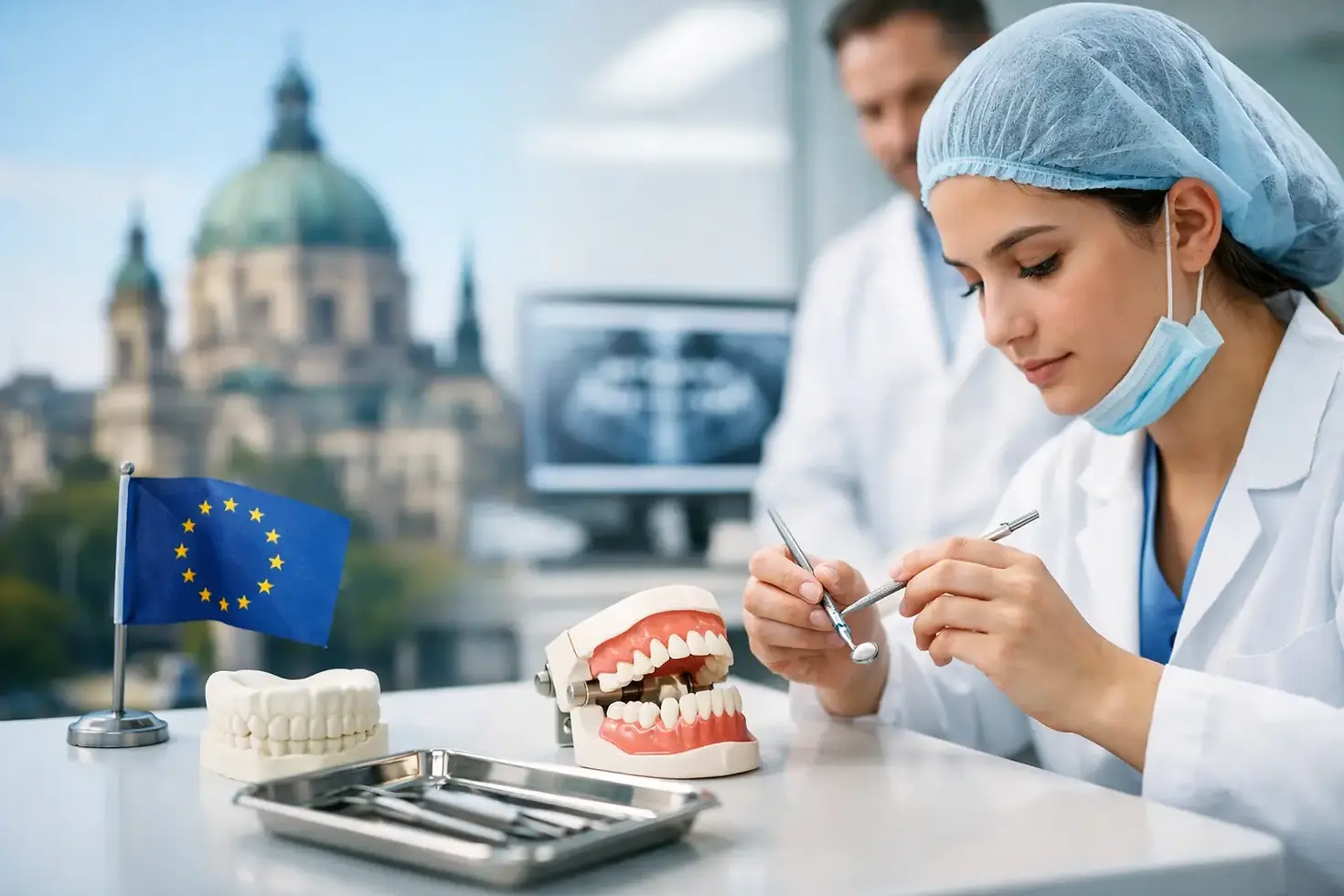
English-Taught Dentistry in Europe
For many students and families, the real question is not whether dentistry is the right career - it is where that career should begin. If you are searching for english taught dentistry Europe options, you are probably looking for more than a degree. You want quality training, international recognition, manageable tuition, and a path that feels realistic rather than out of reach.
That is exactly why Europe has become such a strong choice for future dentists from the US, Canada, and other international backgrounds. Among the available destinations, Hungary stands out for students who want an English-language dental education with a long academic tradition, respected universities, and a more affordable entry point than many North American routes.
Why students look for english taught dentistry Europe programs
Dentistry is a competitive field almost everywhere. In North America, many applicants face a difficult combination of limited seats, high tuition, and long admissions timelines. Even highly motivated students can find themselves waiting through repeated application cycles, trying to strengthen profiles while costs continue to rise.
English-taught programs in Europe appeal to students who want a more direct and practical path. They offer the chance to begin professional training earlier, study in a culturally rich environment, and earn a degree that can support future mobility. For students from internationally minded families, that combination can be especially attractive.
Still, not every European option is equal. The phrase english taught dentistry Europe covers many countries, institutions, and systems. What matters most is choosing a program that combines academic credibility with a structure that supports international students from admission through arrival.
Why Hungary deserves serious attention
Hungary has built a strong reputation in health sciences education, and dentistry is one of the clearest examples. The country is known for established universities, a serious academic culture, and degree programs designed to serve international cohorts in English.
For many students, the advantage starts with value. Tuition is still a major investment, but Hungary is often more affordable than comparable professional education options in the US and Canada. Living costs can also be more manageable, which matters for families thinking beyond the first semester and planning for the full duration of the program.
There is also a practical benefit to studying in a country that has welcomed international medical and dental students for many years. Universities with long-running English programs usually understand the real needs of students coming from abroad. That affects everything from admissions communication to orientation and classroom integration.
What an English-taught dentistry degree in Europe usually includes
Most dentistry programs in Europe follow a long-cycle structure that combines foundational sciences, preclinical training, and clinical practice over several years. In an English-taught format, students study core subjects such as anatomy, physiology, biochemistry, pathology, oral biology, and dental materials before moving further into hands-on dental disciplines.
As the program progresses, training becomes more clinically focused. Students work through restorative dentistry, prosthodontics, periodontology, oral surgery, orthodontics, pediatric dentistry, and radiology, while also developing patient communication and treatment planning skills. That progression is important because dentistry is not only academic. It is technical, interpersonal, and highly regulated.
The exact structure can vary by university. Some programs are more research-oriented in the early years, while others emphasize earlier practical exposure. That is one reason students should not choose based on country alone. University fit matters.
Admissions: competitive, but often more transparent
One of the reasons students consider Hungary is that the admissions process can feel clearer than the domestic alternatives they may be comparing. That does not mean easy. Dentistry remains selective, and universities expect strong science preparation, motivation, and readiness for a demanding course load.
Applicants are commonly assessed on subjects like biology, chemistry, and sometimes physics or English. Some universities require an entrance exam and interview, while others may evaluate transcripts and academic background in more detail. The key point is that the process is usually centered on academic readiness for the program itself.
For many students, that feels more straightforward than systems built around multiple layers of prerequisites, test timing, unpredictable acceptance rates, and very high competition for a small number of places. If you are organized and guided properly, the path can be much easier to understand.
Cost matters, but so does long-term value
Families often begin with tuition, and understandably so. Dentistry is a major investment wherever you study. But cost should be viewed alongside outcomes, program quality, and the level of support you receive through the process.
Hungary is appealing because it often delivers a better balance between affordability and reputation. Students gain access to established dental education without the price point many families associate with North American professional training. Housing, transportation, and daily expenses can also be more reasonable, depending on city and lifestyle.
That said, lower cost should never be the only reason to choose a program. Students need to think about recognition, licensing pathways, language of instruction, quality of clinical exposure, and whether they are personally ready to study abroad for several years. A more affordable degree is only a good decision if it also supports your future professional goals.
Career planning after graduation
This is where honest guidance matters. Students often ask whether an English-taught dentistry degree in Europe will allow them to practice anywhere. The real answer is that it depends on where you want to build your career.
Dental licensing is country-specific. A degree from Europe may be respected internationally, but graduates usually still need to meet the licensing rules of the country where they plan to practice. That can involve exams, equivalency procedures, language requirements, supervised training, or additional documentation.
For some students, this is not a drawback. It is simply part of planning a global healthcare career. If you know early on that you may want to return to the US, Canada, or another market, you should evaluate programs with that future in mind. The smartest applicants are not only asking where they can study. They are asking how today’s degree fits tomorrow’s licensure path.
Student life and the transition abroad
The academic side is only part of the decision. Students also need to feel capable of building a life in a new country. Moving to Europe for dentistry is exciting, but it also involves practical adjustments - visas, housing, registration, budgeting, and adapting to a different classroom culture.
This is where the right support makes a real difference. A strong admissions pathway should not end with an acceptance letter. Students benefit from help that continues through the move itself, especially if they are leaving home for the first time or relocating from North America to Central Europe.
Hungary is often a comfortable entry point because it combines European experience with a student-friendly environment and a history of international education. Many students appreciate the balance: they gain independence and global exposure while still studying in a structured, academically serious setting.
Is Hungary the right fit for every dentistry student?
Not always, and that is worth saying clearly. Some students want to remain close to home, while others are focused on a very specific licensure route that may shape where they study. Some thrive in international environments immediately. Others need more time or a different academic structure.
But for students who want a respected English-language dentistry program, a more attainable admissions path, and a degree earned in a country known for healthcare education, Hungary deserves a close look. It offers a combination that many applicants struggle to find elsewhere: credibility, affordability, and momentum.
That is why so many families begin by researching Europe broadly and end up focusing on Hungary more seriously. Once you compare the numbers, the academic tradition, and the practical support available, the option starts to feel less like a backup plan and more like a smart first choice.
Choosing the right guidance for english taught dentistry Europe
An international application is too important to approach casually. Program selection, documentation, timing, and preparation all matter, especially in a field as demanding as dentistry. Students who work with experienced guidance often avoid delays, misunderstandings, and missed opportunities.
For applicants interested in Hungary, University International Studies helps turn a complex international process into a clearer path forward, from program matching to application support and arrival preparation. That kind of structure can be invaluable when the goal is not just to get admitted, but to begin confidently.
If dentistry is your goal, the best next step is not to wait for the perfect moment. It is to start asking better questions now - about fit, recognition, cost, and where your education can take you.
Comments